BPOTY 12 Judge Spotlight: Richard Peters
Want to find out more about the BPOTY 12 judges? We've been catching up with the panel to find out more about their careers in wildlife photography and the subjects they most enjoy capturing.
Read on to discover more about award winning wildlife photographer Richard Peters - including his top tips for entering the competition!
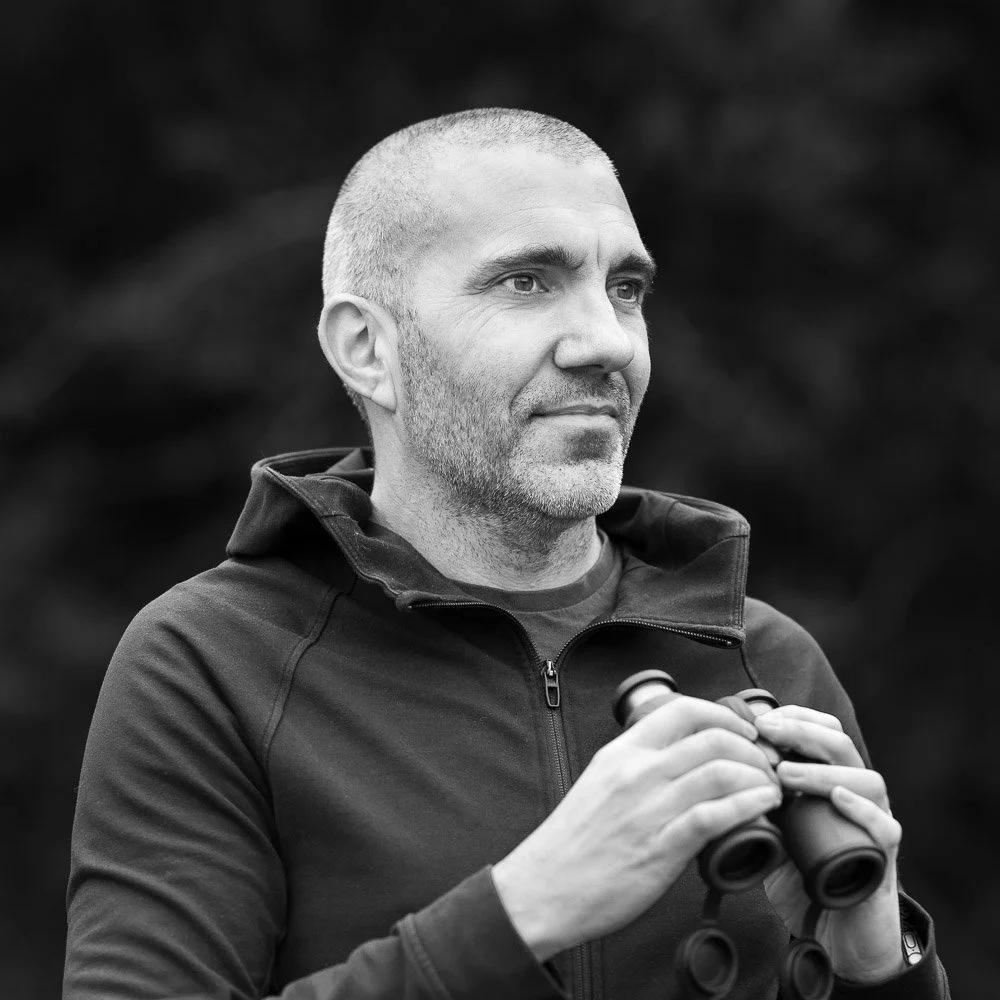
What inspired you to take up photography, why did you choose to make it your career and what do you love most about it?
When I was a kid I used to play outside all the time, so I was very much used to seeing birds, squirrels etc in the local park. That led to a love of some of the earlier BBC programmes such as Big Cat Diaries. Also, I was always creative and loved to draw. But it wasn’t until 2000 that I went on my first holiday to Canada, and just photographed anything and everything. It was with a very basic film camera but after that I was loaned a fully manual film camera, and as soon as I saw the effect you could have on a photo with narrow depths of field and exposure adjustments, I was hooked.
I spent the next 10 years spending time with the camera as much as possible and, eventually, in 2010, started to gain some traction with my work (this was before the days of instant eyes on your work with social media). A couple of years later, in 2012, I won my first award in Wildlife Photographer of the Year. Everything just built up from that point on.
I love multiple things about it. That it gets me to places I would maybe have never otherwise seen. It allows me to be at one with my thoughts, which is really good for my mental health. Sitting quietly and watching, sometimes for hours, as a wild animal goes about its daily life, really focuses the mind and is very cathartic for me. And of course I love the satisfaction of capturing an image that resonates with my creative side. The longer I do it though, the less I crave the gratification of the image and the more I prioritise how good it is for my state of mind and how lucky I am to spend so much time in these places and with these animals.
Tell us about a highlight and a lowlight of your career
There have been many highlights. Putting competition success to the side, because it feels like too obvious an answer, it would have to be when I was the first wildlife photographer in the world to shoot with one of Nikon’s pre-production super telephoto lenses.
They flew someone over from Japan with it, who I met at Heathrow. I collected it, then flew to Yellowstone to take marketing photos. I then flew home, met the same person at Heathrow, who had flown back in just to collect it. What made it memorable was just how high pressure it was. I was under very strict criteria for how I had to set the camera for the various shots. So it wasn’t just finding the subject, it was finding the subject, then checking the specific requirements for the aspect of the lens the shot was to convey. And of course, I sold the shoot to them as winter wildlife, but when I got to Yellowstone, they’d had an unseasonably snow-free start to the season! Thankfully, the snow came two days in, so I had four days to capture the animals in the snowy conditions I’d pitched!
My lowlights tend to revolve around injuries that put me out of action. I have a few recurring ones. Currently, I have very bad tendonitis, which means holding the camera to my eye is very painful, so that is severely limiting my shooting. Another example is from one of our workshops last year to the Maasai Mara, I’d just unexpectedly had my appendix out 10 days before. So I had to leave all my camera kit at home as I wasn’t allowed to lift anything. Of course, I was thrilled for the guests to get good sightings, as they are always the priority. But I couldn’t help but feel disappointed when one morning we had a leopard cub playing in a lovely tree, and all I could do was watch.
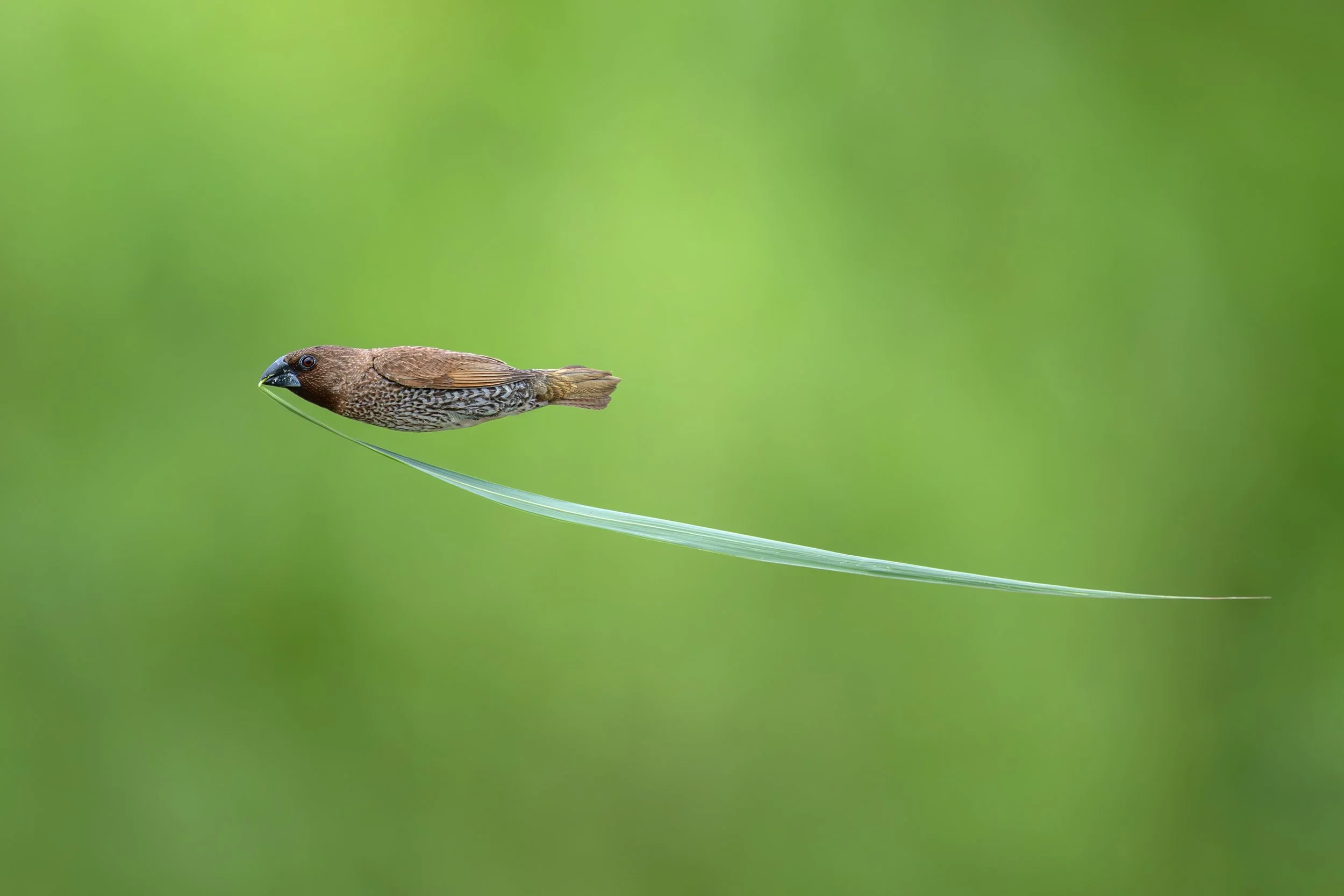
BPOTY 12 is open for entries!
If you could go back to when you were just starting out, what advice would you give yourself?
Be honest and true to your word, and just shoot for you. Anything else is a bonus. But thankfully, that is a line I was given early on anyway. So my advice would be, don’t change anything!
I’ve always taken pride in being honest and true to myself, whether it’s in assessing my own work, where I am my own worst critic, or working with brands. I’ve been involved with some great ones and turned down many more, because I simply don’t use and wouldn’t use the product. Not because I think it’s bad, but because it simply doesn’t suit me. And if I do use the kit, I’ll still point out what I feel could be improved. I am most certainly not a ‘yes’ man, and I would say over the years it has meant missing opportunities that, on face value, would appear amazing. But internally I know I’d be going against my own thoughts and opinions.
If I were to do it all over again, I wouldn’t change anything. I was lucky to start out when it was all so much easier though.
Now, with social media, there are so many more people doing it, and everyone wants to make a name for themselves and get instant gratification. Sometimes it feels as though that is more important than the photography itself. Almost as if the photography is just the vessel to get to the ‘fame’ and the Likes, rather than the passion and joy of taking photos just to enjoy the process. So actually, I think what I’m trying to say in my answer is that authenticity is the key, and I would remind my younger self to remain authentic.
What is your favorite bird species to photograph and why?
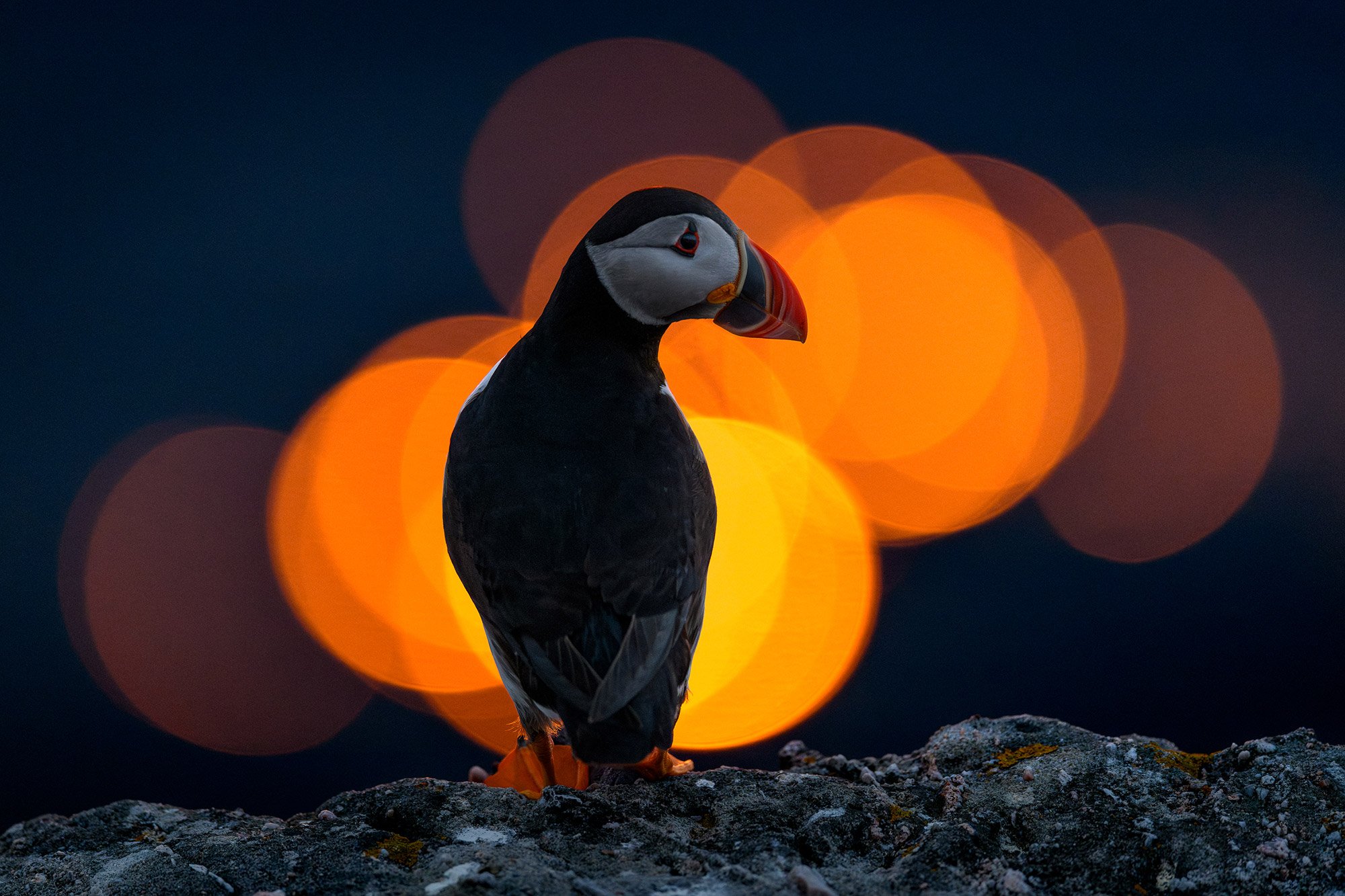
Easy. And a bit of a cliché. It has to be the puffin!
I generally find the larger the bird, the more I enjoy photographing it, but what I love about puffins is just sitting quietly at sunset at a colony, surrounded by thousands of them, just watching them walk past you and peck at your shoelaces without a care in the world.
Photographically, I think they offer a lot of variety too, but without a doubt the biggest factor is just the peacefulness of being with them. You pose no threat, and they know it. It’s how all wild encounters should be.
© Richard Peters
Show us your favorite photo that you have ever taken - why is it your favourite and what is the story behind it?
I’m not sure I can pick a favourite ever photo. I go back and forth between a lot of them as my mood and style preferences change.
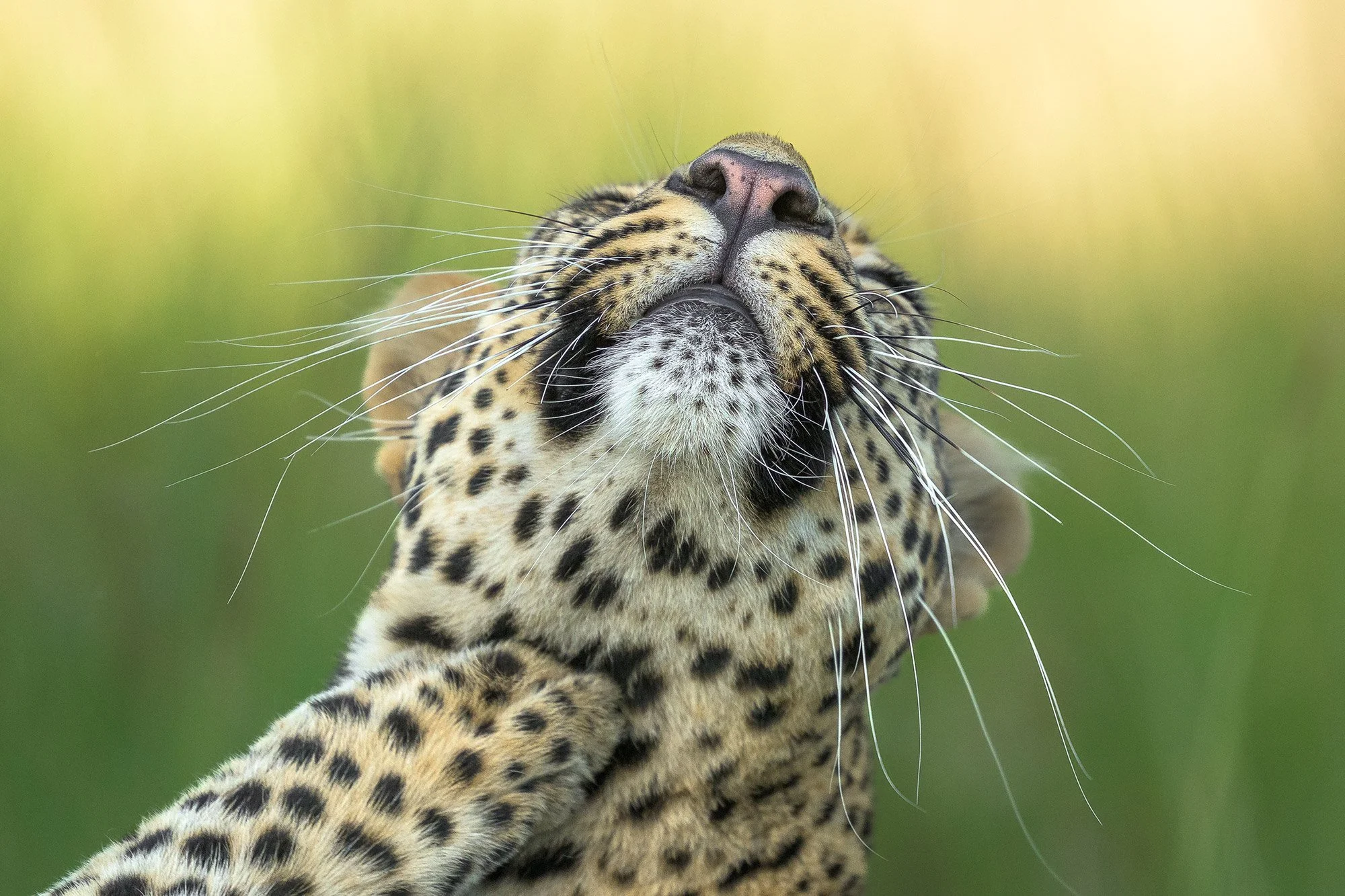
One of my current favourites is of the beautiful leopard Ndoto, from Mara North. Sadly, she passed away recently and that is maybe why I’m drawn to this image quite heavily at the moment. It’s a very simple image but one that would be very hard to repeat.
Captured when the light was actually very harsh but, thankfully, she was under the shadow of a tree. This softened the shadows on her but allowed for more vibrant colours in the background grass. We were also down in a slight ditch, so we could shoot almost straight out the window but be seemingly at eye level. When she lifted her head to scratch under her chin, I flicked my teleconverter in place to go in tight. A combination of the colour palette of the image, the angle of her head, and the way it shows off those lovely long whiskers has resulted in a soft spot for this image ever since I captured it.
© Richard Peters
What is the most challenging shot you’ve ever captured - and why?
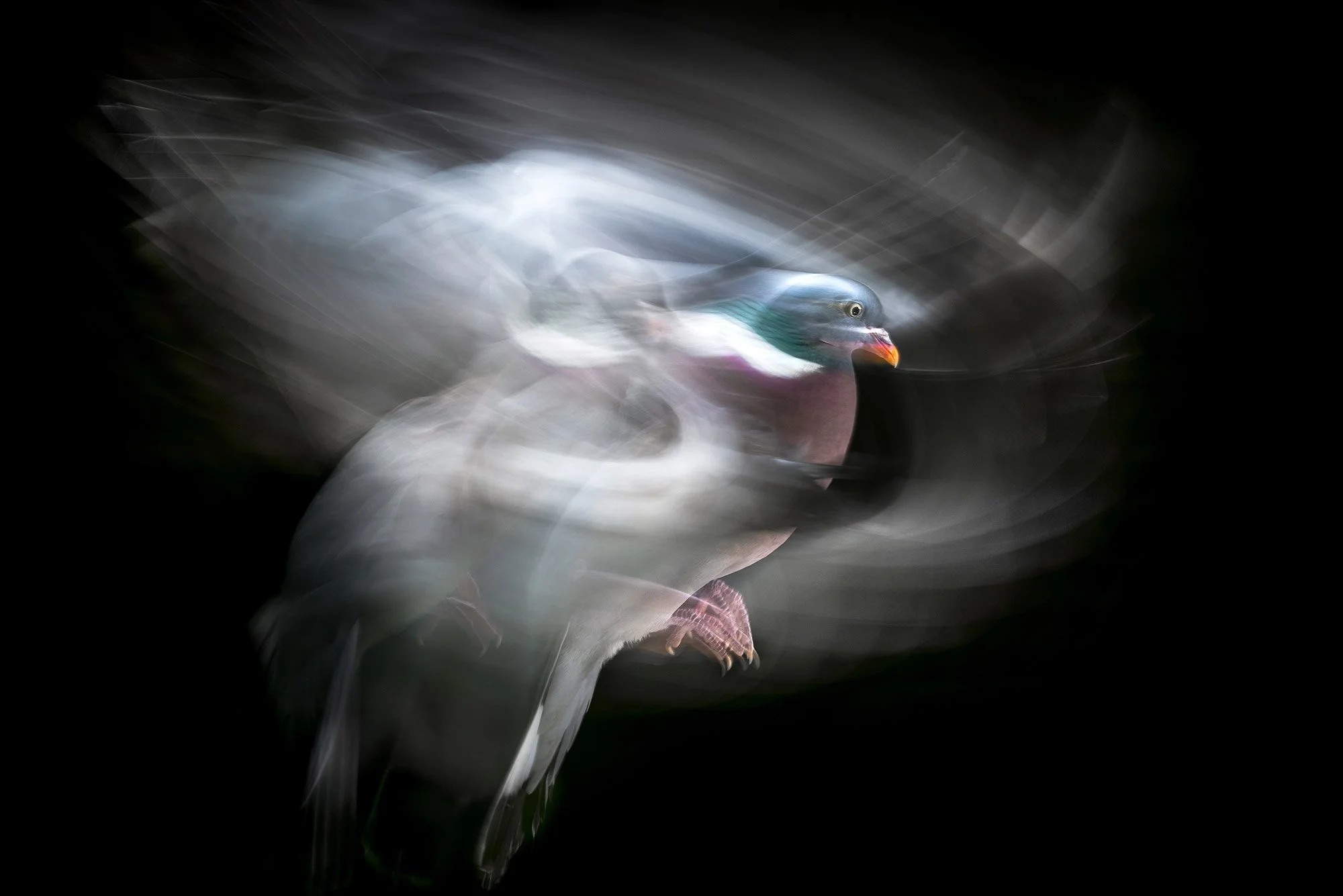
I have a couple that were challenging, but keeping with the theme of the competition, this shot of a pigeon in my garden was actually one of the hardest photos from a technical standpoint.
It’s quite an old shot now, being 11 years old, but still a favourite bird photo of mine. I wanted to show the pigeons in my garden in an interesting way. And I’d always thought, when watching them fly, how chaotic the wing movements seemed, but also how the white in the wings streaks as they flap.
Figuring out how to capture it was difficult. Taken in the back garden, I could only take the shot at a certain time of the day, when the back of the garden was in shadow but the front half in the light. I needed to place my 400mm at the right distance to ensure the bird filled the frame as much as possible, as I didn’t want to rely on heavy cropping, and I needed a remote release as I wanted a slow shutter speed to freeze the motion of the wings. Then I had to place the camera pointing to a repeatable flight path, which ended up being the birds flying from the garden shed roof to the bird table. There was also a small pop of low powered flash at the end of the slow shutter.
A lot of elements had to come together and it took a lot of trial and error. The end result was worth it though, with a wonderful ’S’ shape caught in the wing movement, and essentially a full frame shot with only the smallest 5% used to put the finishing touch on the composition.
For me it was a great example of a simple subject providing an interesting shot. And it’s been lovely to see how others have interpreted and evolved this type of image with garden birds, as the years have gone on.
© Richard Peters
Which BPOTY category is your favorite and why?
Tough question. I think it has to be Creative Perspectives.
One of the things I love most about photography is seeing how other people interpret things. Whilst a good solid portrait is always lovely, and I favour more and more to see smaller in the frame style shots, including habitat, it’s always creativity that stops me in my tracks.
Seeing something in a way nobody else has makes the image feel more personal, to me at least. The flip side is creativity can very much split opinions, so it is also a very divisive category, I think. That makes a photo more interesting though, if it sparks a conversation.
You can see the full list of BPOTY 12 Categories here.
What are your top tips and advice to entrants - how can they make their images stand out?
Look at what has come before of the same subject and ask yourself if your images or idea are truly a step up, or just a similar variation of the same.
The easiest way to do that is photographing something that you don’t see every day. Almost not a day goes by without a puffin appearing somewhere, but when was the last time you saw a really unique magpie image? A new twist on a common subject will stand out far more than a similar twist on a heavily photographed subject.
For me, the other thing is making sure you don’t rely on heavy over-editing. There is nothing more unfortunate than having an amazing image come through, only to check the RAW file and discover the original image looked nothing like the submitted one.
Be true to what you captured, you’ll impress a judge far more if you work hard and get the image 90% at the moment of capture, rather than 10% capture and 90% manipulation. It makes it much harder to achieve good images, especially with smaller birds, but therein lies the payoff of the hard work.
Image selection is also another challenge. Being really critical of your own work is so hard to do, because sometimes it may have taken you days or weeks or months to get the shot. But if the framing is off, or the light is bad, or there’s a distraction in the background, on face value the image may not be as strong as you want. What can happen is your subjectivity is clouded by the emotion of how hard it was to take.
Richard will be joining our other wonderful judges on the Bird Photographer of the Year panel.
Entries for this year’s competition are now open!